
Gove County Court Records After Arrest
After a Gove County jail arrest, the first public record may be a custody record held by Trego County Detention Facility or Thomas County Jail. The court record starts when the prosecutor files the formal case in the 23rd Judicial District. That filing can make the difference between a roster charge and a court charge. A roster may show an arresting-agency label, a warrant, a probation violation, or "Housing for Other." The district court record shows what was filed and what the judge did next.
For custody and booking detail, use Gove County jail inmate records. For booking photos, use Gove County jail mugshots. Court records after a jail arrest are a separate path through Kansas CaseSearch, the Gove County District Court clerk, and the Gove County Attorney's Office.
Find Gove County Court Records
Kansas CaseSearch is the statewide online route for public district-court case records. Official court materials say public users can search by party name or case number and may need to prove they are not a robot. Expanded access exists for approved users, and courthouse public-access terminals remain a fallback when online access is incomplete or restricted.
- Open Kansas CaseSearch.
- Search by defendant name, case number, citation, or other allowed criteria.
- Open the case tied to Gove County or the 23rd Judicial District.
- Read the charge list, hearing entries, bond orders, and disposition fields.
- Contact Gove County District Court if the online record is missing, sealed, or unclear.
The Kansas CaseSearch portal is the statewide court-record search entry point for Gove County cases.
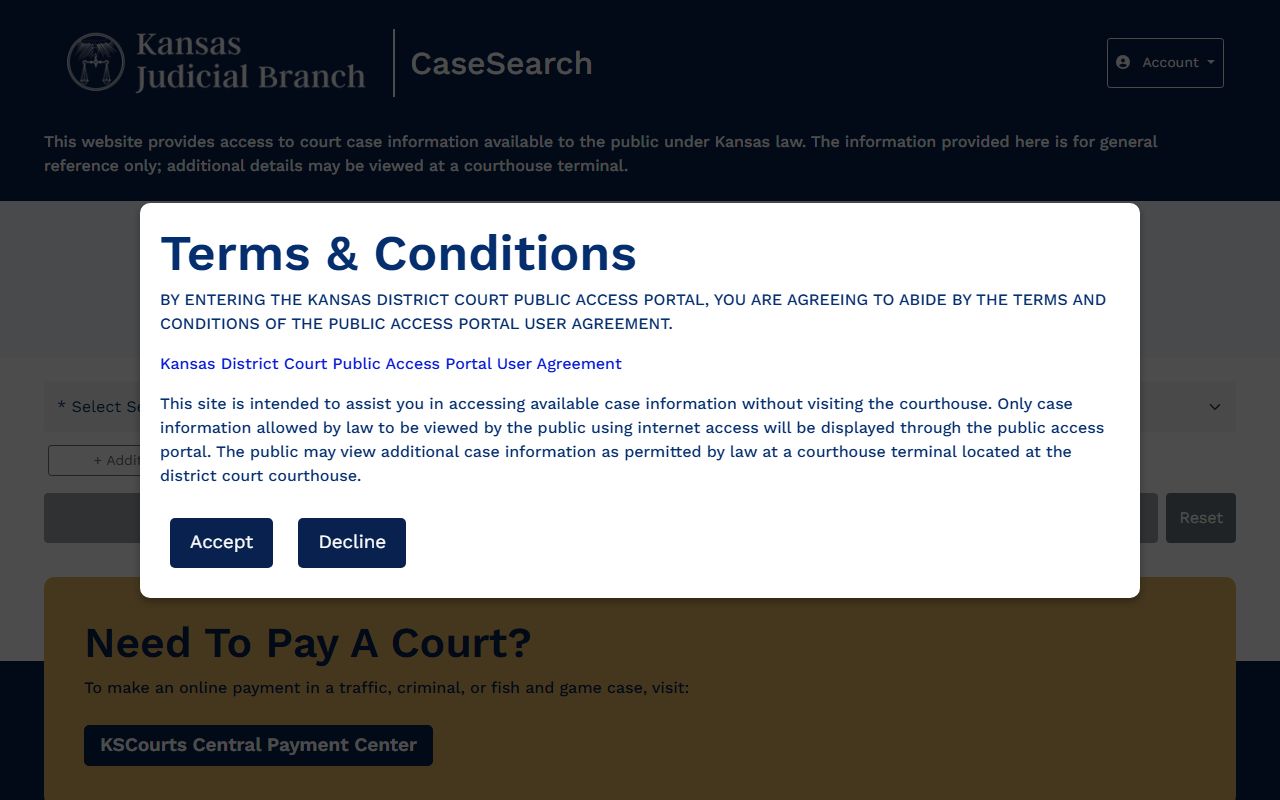
Use the portal for case status, but use the jail or sheriff for current custody status.
Gove County District Court
Gove County District Court is in the 23rd Judicial District. The court page lists 420 Broad Street, PO Box 97, Gove, KS 67736, phone 785-938-2310, fax 785-938-2312, clerk email Gove_County_Clerk@kscourts.gov, and office hours Monday-Friday 8:00 a.m.-4:30 p.m. Staff listed in the research include Chief District Judge Curtis Brown, District Judge Thomas Drees, Magistrate Judge Brendon Boone, Clerk of the District Court I Janna Cook, and Trial Court Clerk II Jessica James.
The official Gove County District Court page provides clerk contact details and records links.
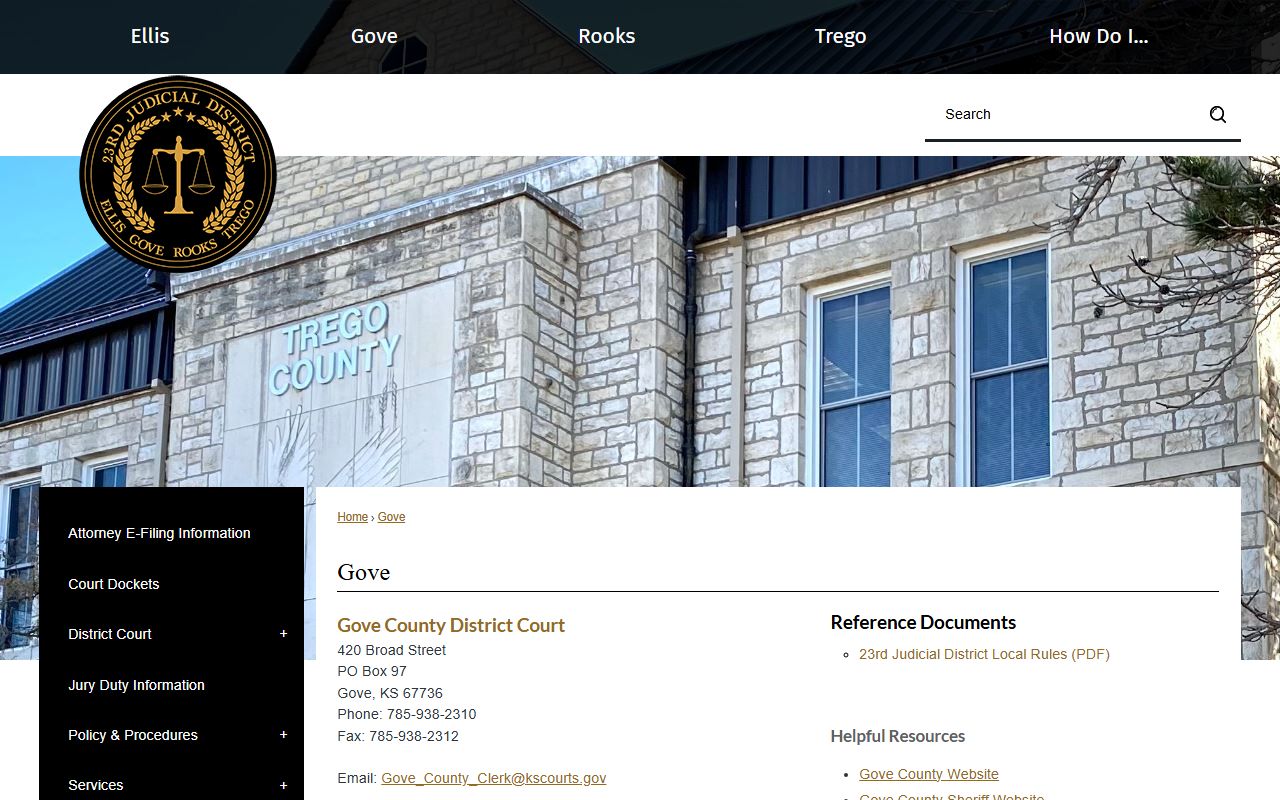
The clerk is the fallback for courthouse access, records questions, and case entries that do not appear online.
Charges After a Gove Arrest
The Gove County Attorney, Steven Hirsch, is responsible for felony prosecution, misdemeanor prosecution, domestic battery prosecution, county traffic violations, juvenile offender matters, and several care-and-treatment case types. A jail booking can occur before the formal charging document is filed. Once filed, that document becomes part of the court records after the arrest.
| Document | Filed By | What It Does |
|---|---|---|
| Complaint | Prosecutor or law enforcement process | Starts many criminal cases by stating the alleged offense. |
| Information | Prosecutor | States formal charges after prosecutor review, often in felony cases. |
| Indictment | Grand jury | Charges an offense after grand-jury action when that route is used. |
Gove County Charge Status
Charges can change after the first arrest record. Prosecutors may amend, reduce, add, dismiss, or decline counts. A court may also set conditions, continue hearings, revoke bond, or note a failure to appear. CaseSearch and the clerk record are the places to verify the current status.
| Status | What It Means |
|---|---|
| Pending | The case or charge is still active and has not reached final disposition. |
| Amended / Reduced | The filed charge changed from the first version shown in court or on a roster. |
| Dismissed | The court record shows the count or case was dropped by order or motion. |
| Disposition | The case has reached a plea, verdict, diversion, sentence, dismissal, or other final event. |
Bond After a Gove Arrest
Bond questions are split in Gove County because the arresting agency and holding jail may not be the same office. Call Gove first, then call Trego or Thomas for facility-specific posting instructions. Trego publishes 24/7 bonding by appointment and lists bonding companies as a directory. Thomas states it does not recommend or endorse attorneys or bonding companies and that messages from attorneys and bonding companies will be delivered to inmates.
| Bond Type | How It Works |
|---|---|
| Cash Bond | Money is paid directly under the court's order. |
| Surety Bond | A licensed bonding company posts bond under its agreement with the defendant or family. |
| PR Bond | The court releases the person on a promise to appear. |
| No-Bond Hold | Release is blocked until the court or holding agency changes the status. |
Bond may not release a person if another hold remains, such as a probation violation, parole hold, warrant from another county, ICE detainer, federal hold, or KDOC hold.
Warrants and Gove Court Records
No Gove County sheriff active-warrant search was located on the official Gove sheriff site. For Gove warrants, use Gove County Sheriff's Office, Gove County District Court, and Kansas CaseSearch. Thomas County, one of the contract-housing channels, publishes a searchable warrant list with name, warrant number, charges, bond, date, age, sex, and race. That Thomas list can help when the warrant or housing path involves Thomas County, but it is not a complete Gove warrant database.
The Thomas County warrant list shows the type of searchable warrant fields available from a Gove contract-housing partner.
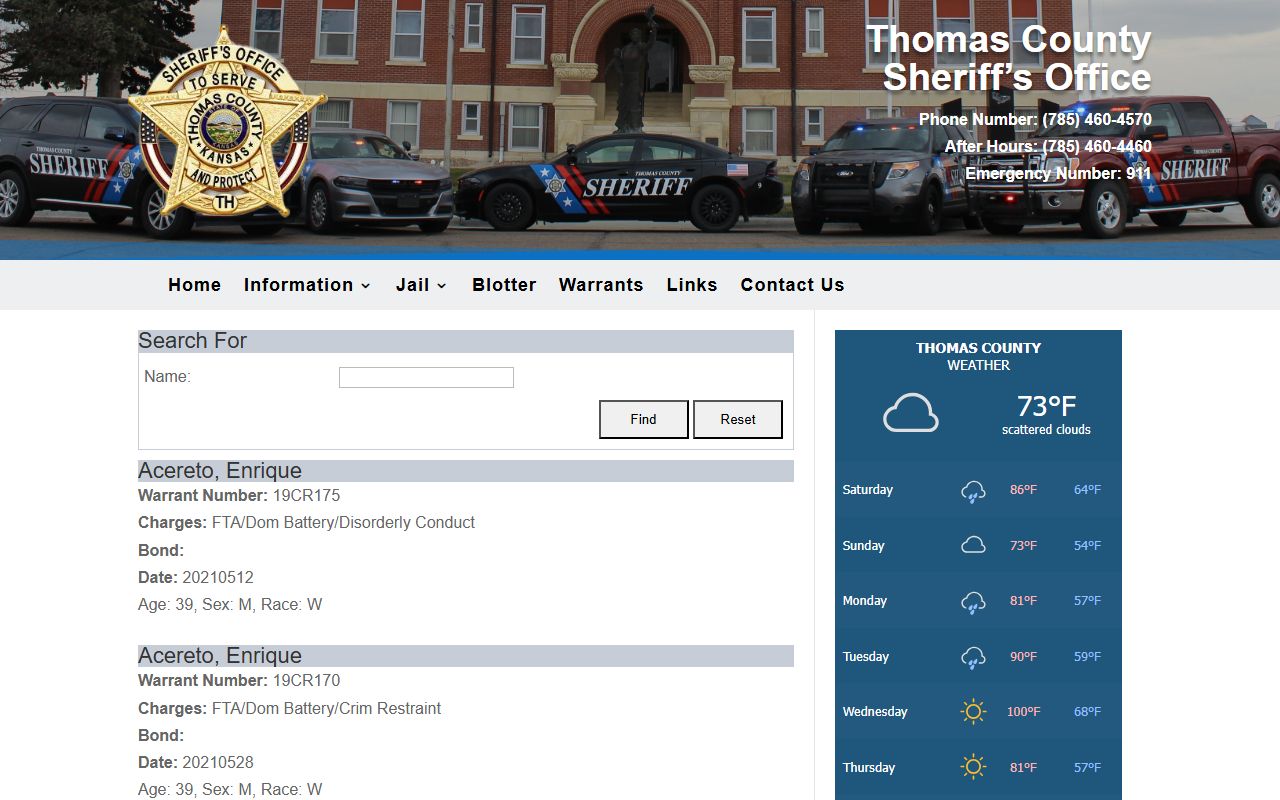
For a Gove-specific warrant, confirm with the Gove sheriff or district court before relying on a partner-county list.
Charges vs Convictions
A charge is an accusation or filed count. A conviction is a result after a plea, verdict, or other qualifying disposition. Gove County court records after an arrest can show both, but the distinction matters for employment, licensing, housing, and personal record review. A jail roster charge alone is not a conviction.
| Charge | Conviction | |
|---|---|---|
| Stage | Accusation or filed count | Final result after plea or verdict |
| Proof Level | Based on arrest, complaint, or probable cause | Requires a legal finding or plea |
| Where Seen | Roster labels, complaint, CaseSearch | Court disposition and KDOC records when prison follows |
Sealed or Expunged Records
Kansas expungement is a court process. The Kansas Judicial Branch self-help material explains eligible arrest, conviction, and diversion records may be expunged through court action. Expungement can affect public access, but it is not the same as asking a roster site to remove a current custody record.
| Sealed | Expunged | |
|---|---|---|
| Visibility | Restricted from ordinary public view | Limited or removed from public access by court order |
| How It Happens | Court rule, confidentiality law, or order | Petition and court process under Kansas law |
| Where to Start | Gove County District Court or attorney | Kansas Judicial Branch expungement guidance |
Court Records and Background Checks
Casual public-record lookup is not the same as an FCRA-compliant background check. Court records after a jail arrest can be incomplete, restricted, amended, or expunged. Use the originating court and agency to verify the official status of a case.
Important: Do not use informal jail or court lookup results for employment, credit, housing, insurance, or other FCRA-covered decisions.
Restricted Gove Court Records
Some records may be limited by law, case type, court order, juvenile confidentiality, sealed status, expungement, or an ongoing investigation. Kansas public-access materials point users to online portals and courthouse terminals, but they do not make every document public. When CaseSearch omits a case or document, contact the Gove County District Court clerk and ask whether the record is public, sealed, confidential, or available only at the courthouse.
Search-warrant materials have their own access rules and should not be treated as ordinary jail roster records. A bench warrant after failure to appear may be visible through court channels, while an investigative affidavit or juvenile record may be restricted. The most reliable phrasing for a clerk request is specific: ask for the case number, party name, filing date, document title, and whether public access is available online or only at the courthouse.